
Texas Builder Warranty Laws: Why Homeowners Should Schedule an Inspection at Closing and Before the 11-Month Warranty Deadline
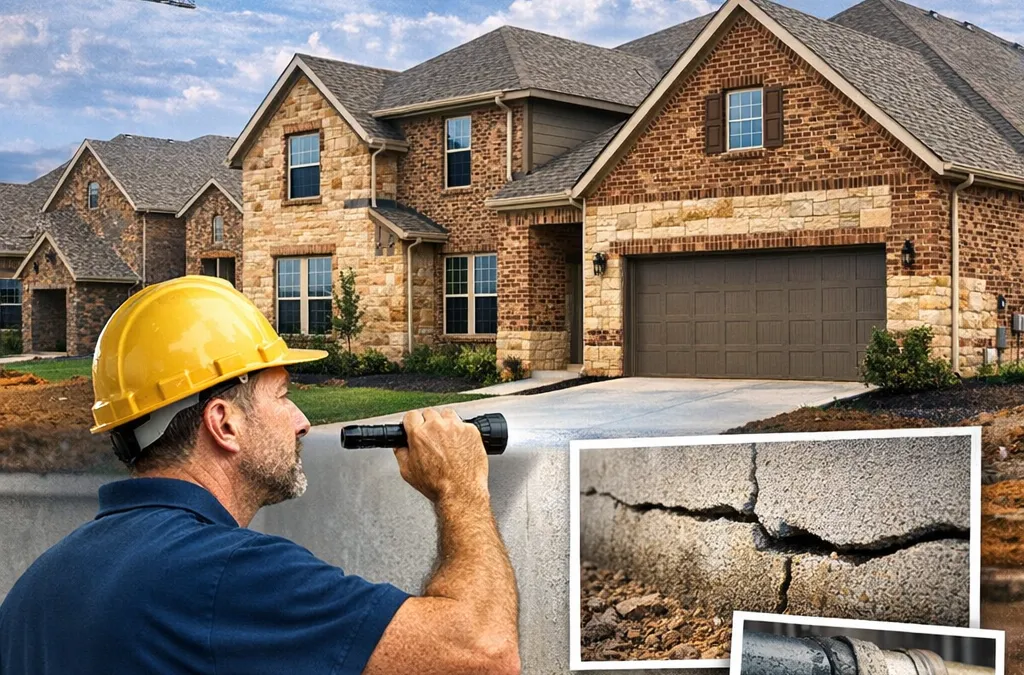
Buying a newly constructed home in Texas is exciting, especially as communities across the state continue to grow rapidly. Cities and suburbs throughout North Texas such as Celina, Prosper, Frisco, and surrounding areas have seen an explosion of new construction homes over the last few years.
But even brand-new homes can have hidden construction defects. That’s why Texas homeowners should schedule a professional home inspection not only before closing, but also again around the 11-month mark of their builder warranty.
Understanding how Texas builder warranties work and how inspections help protect homeowners can save thousands of dollars in repairs.
Understanding Builder Warranties in Texas
When you buy a newly built home in Texas, you typically receive both contractual builder warranties and legal protections under state law.
Texas law recognizes two important implied warranties for newly constructed homes:
- Implied warranty of good workmanship – construction must meet industry standards and be performed properly.
- Implied warranty of habitability – the home must be safe and suitable for living.
Even if these warranties aren’t explicitly written in your contract, they may still apply.
Most builders also offer written warranties that follow the common “1-2-10” structure:
- 1 year – workmanship and materials
- 2 years – mechanical systems such as plumbing, electrical, and HVAC
- 10 years – major structural components
However, the exact coverage varies by builder and contract, so homeowners should always review their warranty documents carefully.
Texas Laws Governing Construction Defects
Texas law provides a framework for resolving construction defects through the Texas Residential Construction Liability Act (RCLA). This law outlines the process homeowners must follow when making claims against builders for construction defects.
In addition, legislative updates have adjusted timelines for builder liability. For example, a builder may qualify for a shorter six-year statute of repose if they provide certain warranty protections.
While these laws provide legal protection, the reality is that identifying problems early while warranties are still active is the homeowner’s best financial protection.
Why a Home Inspection at Closing Is Essential
Many buyers assume a new home doesn’t need an inspection. In reality, construction defects are common in new builds due to tight construction timelines and subcontractor coordination.
A pre-closing home inspection can uncover issues such as:
- Incomplete or poor workmanship
- Electrical or plumbing installation errors
- HVAC installation problems
- Roofing or attic ventilation issues
- Foundation or grading concerns
Identifying these problems before closing allows buyers to request repairs from the builder before finalizing the purchase.
The Importance of the 11-Month Warranty Inspection
The 11-month warranty inspection is one of the most important steps a homeowner can take after purchasing a new home.
This inspection occurs during the 11th month of ownership just before the builder’s one-year warranty expires.
An 11-month inspection helps identify issues such as:
- Foundation settlement cracks
- Door or window alignment problems
- Roofing defects
- HVAC inefficiencies
- Plumbing leaks or drainage issues
If defects are discovered before the warranty deadline, the builder is typically responsible for repairs under the workmanship warranty. After the warranty expires, those costs usually become the homeowner’s responsibility.
Why This Matters Right Now in Texas
Across Texas, thousands of homes were built in the last few years during a major housing boom. Suburbs around Dallas–Fort Worth, Austin, Houston, and San Antonio saw entire master-planned communities constructed in a short period.
That means many homeowners are now approaching the one-year anniversary of their home purchase.
If you purchased a new home in 2024 or early 2025, your builder warranty may be nearing expiration soon. Missing the warranty window could mean paying out of pocket for repairs that should have been covered by the builder.
Schedule Your 11-Month Warranty Inspection
A professional inspection before the warranty expires can help you document defects and request repairs while your builder is still responsible.
Homeowners in North Texas can schedule a professional 11-month warranty inspection before it's too late..
Make sure a licensed inspector will evaluate the home’s structure, roof, HVAC systems, plumbing, electrical systems, and interior components providing a detailed report you can submit directly to your builder.
Protect Your Investment in Your Texas Home
Your home is likely the largest investment you’ll ever make. Even new construction homes can develop problems within the first year of occupancy.
To protect yourself financially:
- Get a home inspection before closing.
- Schedule an 11-month warranty inspection before the builder warranty expires.
- Document all issues and submit them to your builder for repair.
By taking advantage of your warranty period, you can ensure your new Texas home is safe, properly built, and protected for years to come.